
What do we mean by quality in a garment?
Quality is a balanced combination of several key factors:
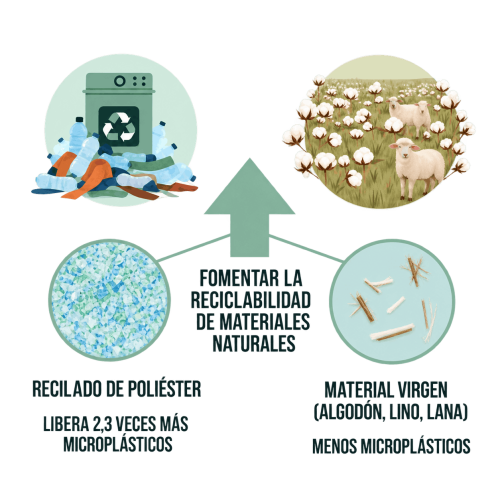
- Functional durability: resistance of materials and construction.
- Good design: refined, timeless aesthetics that are consistent with the intended use.
- Usability: comfort, fit, and adaptation to daily life.
- Emotional durability: brand values and connection with the user.
A high-quality garment extends its useful life, reduces the need for replacement, and, consequently, lessens its environmental impact.
Committing to quality entails prioritizing strategies such as:
Design durable and repairable products.
Redesign, reduce, reuse, and repair before recycling.
Combat planned obsolescence by keeping materials and products in use for as long as possible.
The mistake of promoting recycling using low-quality, high-impact materials
Promoting eco-design and recyclability without ensuring the quality of the garment is a common mistake.
This approach:
- It continues to encourage mindless, low-value consumption.
- It replicates the fast-fashion model, but “reimagined” as sustainable.
- It increases energy consumption and sustains pollution.
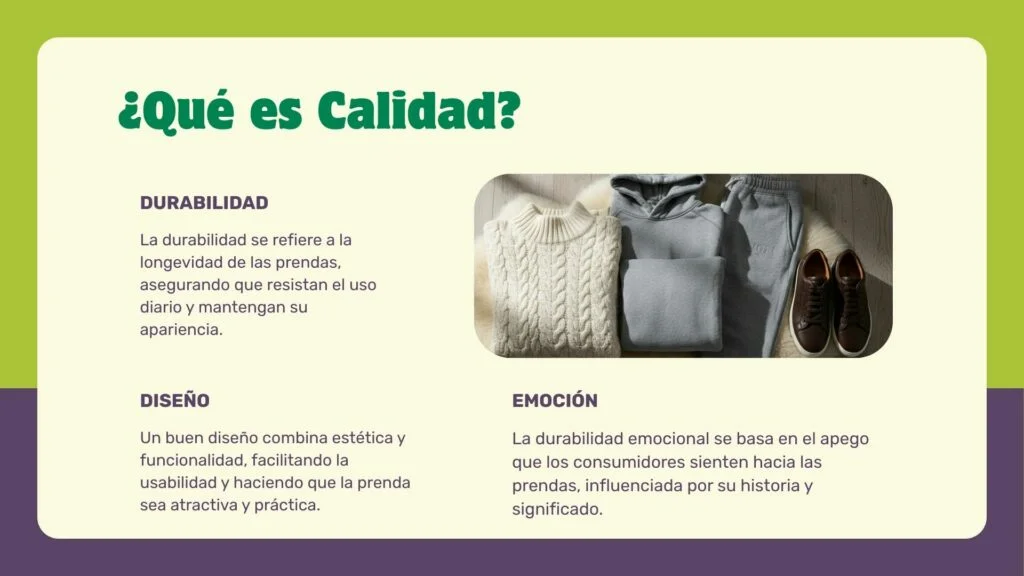
A clear example can be found in certain recycled materials:
Recycled polyester can release up to 2.3 times more microplastics than virgin polyester during use and washing—which goes to show that recycling, if not done to a high standard, is not a real solution.
Quality as a foundation for sustainability and responsible consumption
The fashion industry is facing a structural crisis stemming from the “fast” and “ultra-fast” fashion model: mass production, low costs, poor quality, and a very short product lifespan. This system drives overproduction, overconsumption, and the rapid disposal of clothing and footwear, with serious environmental, social, and economic consequences.
At GERESCAL, we promote an integrated approach in which functional durability and emotional durability must coexist.
Only when a garment is both physically durable and meaningful to the consumer can a genuine reduction in consumption and waste be achieved.
This change involves moving from:
Buying a lot of cheap, short-lived items – vs. – Buying less, with better design and long-term value
From the perspective of the circular economy, quality:
- Extends product life cycles.
- Increase the number of uses per garment.
- Facilitates repair and reuse.
- Reduces pressure on natural resources.
Although there are challenges—such as a higher initial price or a preference for novelty—prioritizing quality is one of the most effective and rapid strategies for reducing the impact of textile and footwear waste.
The three pillars of a truly durable garment
Functional durability: garments that truly last
- Durable materials and quality manufacturing processes.
- Comfortable fit and a design intended for extended use.
- Longer lifespan = lower consumption and less waste
Emotional durability: connecting with what you carry
- Garments that tell a story are valued more.
- Timeless design and personal meaning extend its use.
- Emotional attachment reduces the desire for constant replacement.
A comprehensive approach: functional + emotional
- Sustainability is not just technical resilience.
- It is the combination of material quality and emotional value.
- This encourages care, repair, and conscious use.
Why is quality key to the circular economy in fashion?
Durable garments withstand multiple cycles of use, reduce pressure on natural resources, and decrease textile and footwear waste—a core objective of GERESCAL.
Promoting quality also means promoting a change in consumption habits:
- Fewer impulse purchases.
- Greater investment in pieces with value, meaning, and a long lifespan.
In conclusion
Choosing quality means choosing sustainability. Fashion with a purpose is better for people and for the planet.
At GERESCAL, we encourage you to build a wardrobe with pieces that endure, inspire, and create a positive impact.