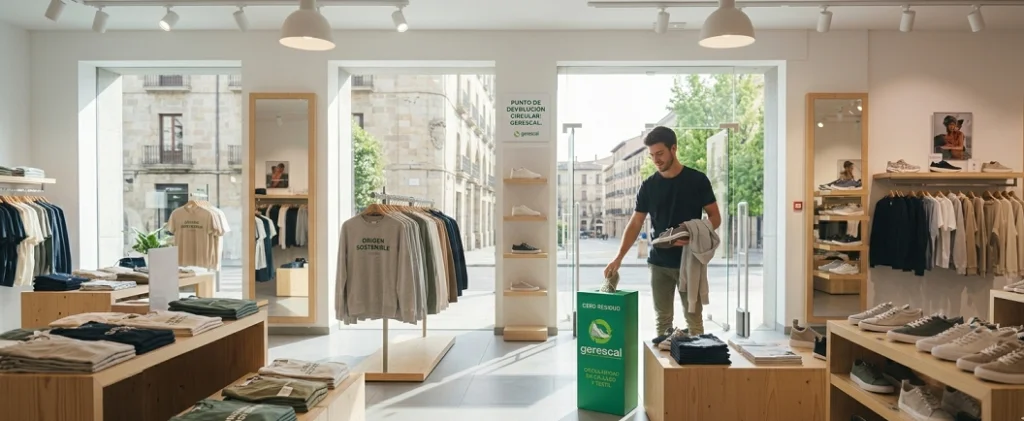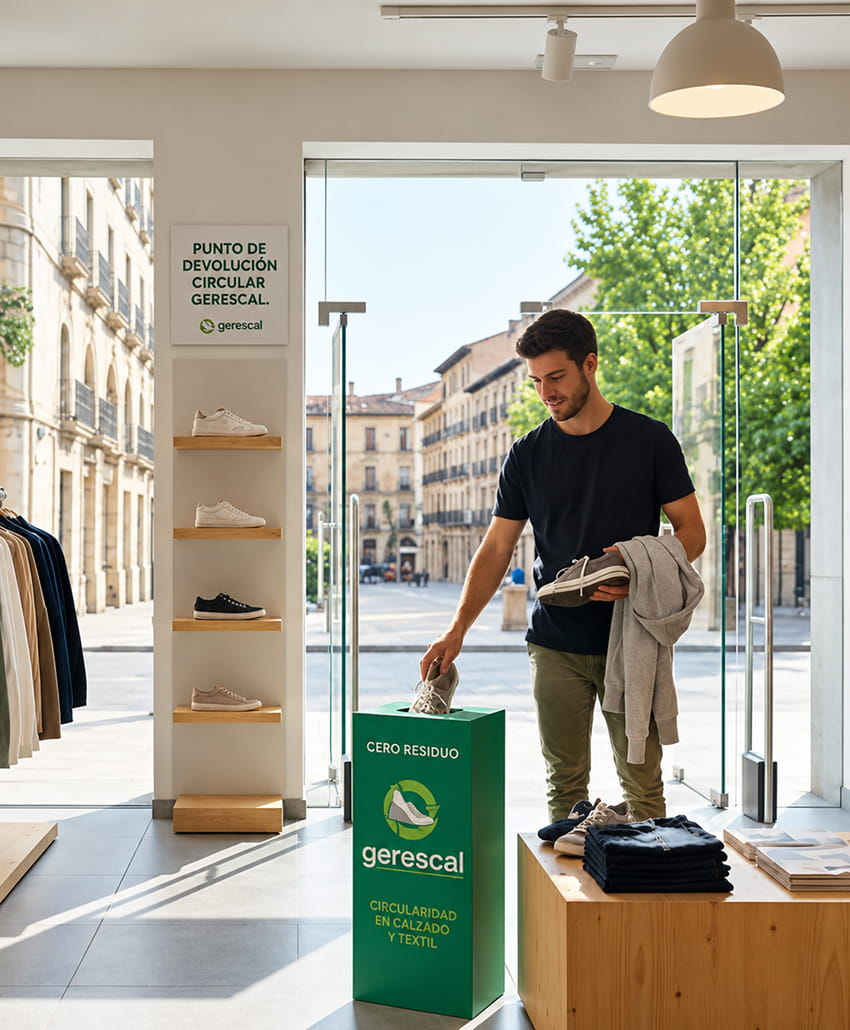
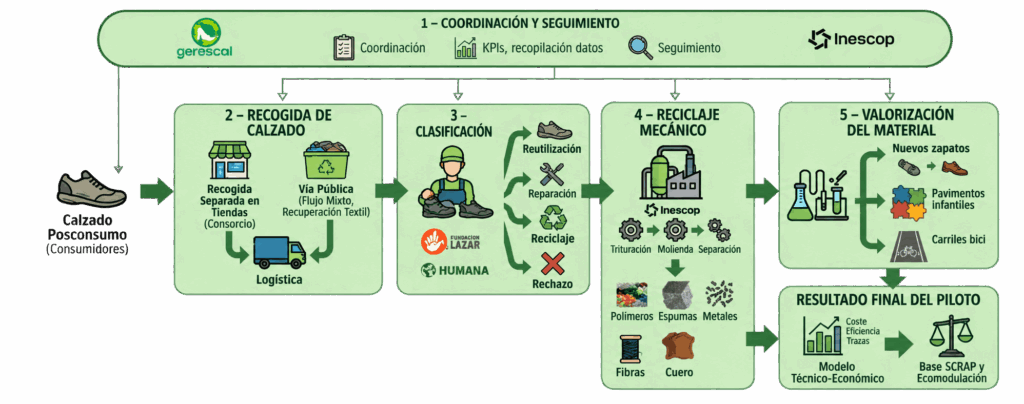
Throughout 2026, we are developing a pilot project to consolidate our operational workflow—covering collection, sorting, reuse, repair, and recycling—with a particular focus on one of the sector’s greatest challenges: the recycling of footwear that cannot be reused.
We developed this pilot project in collaboration with INESCOP, which is responsible for monitoring the entire process and contributing its recycling plant to process non-reusable footwear and optimize material recovery processes.
Two waste streams to improve traceability
The project will be fueled by two waste streams:
Indirect flow, through our partners for collection, sorting, and reuse—including Proyecto Lázaro and Humana Fundación Pueblo para Pueblo.
Direct Flow, developed in partnership with participating companies that will collect used footwear at their own stores, will allow us to work with more uniform materials and explore their use in new components for footwear manufacturing.
At the same time, textile recycling trials will be conducted in partnership with Texlimca, a key player in the development of the textile recycling industry in Spain.
We are well aware of the technical and economic complexity involved in recycling textile waste—particularly used footwear. Meeting the targets set by regulations will require continued technological development, process optimization, and the consolidation of a regulatory framework that truly fosters circularity.
That is why we at GERESCAL believe that the circular model must begin before recycling, and we are committed to:
An Industrial and Regulatory Challenge
Ecodesign
Durable, high-quality products
Repair
Reuse
Only in this way will it be possible to increase reuse and generate real demand for recycled materials derived from post-consumer waste